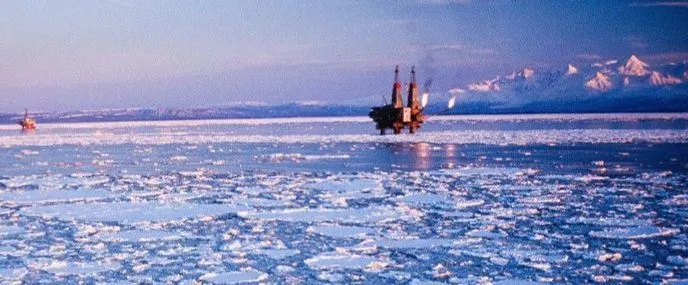
The European Union will shun crude oil and natural gas produced from fields in the Arctic, recommending that these “stay in the ground” under its new Arctic strategy released this week. The reiteration of the EU’s stance on Arctic hydrocarbons comes amid a severe fuel crisis and soaring gas prices ahead of winter peak demand season.
The update on the Arctic strategy of the bloc that has quite limited geographical exposure to the Arctic comes five years after the last one, as the Arctic draws increasing attention, notably from the U.S. administration, with President Trump notoriously demanding that Denmark sell Greenland to the U.S. For the EU, the focus is on security, with the strategy detailing plans for a Maritime Security Hub for the monitoring and repair of subsea cables in the area.
To be fair, EU countries do not really have territories rich in oil and gas. In fact, the only countries that have a small Arctic footprint are Sweden and Finland, whose northernmost parts are in the Arctic Circle. Denmark could be seen as having the greatest Arctic presence with Greenland, but since the island is an autonomous entity, which makes that presence formal rather than practical.
This leaves Norway as the Western European country with the largest Arctic presence—and Norway has made it quite plain it will develop its Arctic oil and gas resources. Indeed, the country’s energy minister earlier this year said that “In today’s geopolitical and security environment, and given the resource situation, I believe continued activity in the Barents Sea serves both Norwegian and European interests.”
Further, Terje Aasland said at the time that “We would develop these areas, and then it will be up to the EU whether they should have a moratorium on buying that gas or oil.” Now, the EU has stated its decision on the matter, which means Norway would be free to sell its Arctic oil and gas to global buyers while the EU would be busy making sure that the gas it buys from Norway did not come from any of its fields in the Barents Sea.
There was, however, a small breakthrough in the new strategy: the word “moratorium” with regard to oil and gas drilling in the Arctic was removed from the document. “We welcome the fact that there is no longer any talk of a moratorium on oil and gas from Arctic regions,” Norway’s Aasland said, as quoted by Bloomberg, adding “production in our northern regions will become increasingly important in the years ahead.”
Meanwhile, the EU plans to take on Russia in the Arctic—Russia being the country with the biggest Arctic territory and the longest Arctic coastline. With so much of Russia actually in the Arctic, it is little surprise the country has been busy there for about two decades, building infrastructure—including military infrastructure—but also transport and energy. The Northern Sea Route has become a very convenient alternative to other routes between Europe and China, and Russia is already exporting goods to its neighbor through it.
Some would argue the EU’s push to have a say in the Arctic where, again, it has very little actual geographical presence, is too little, too late. Clearly, the new strategy is related to the rearmament drive prompted by EU foreign policy, but without a secure energy supply, that rearmament would be problematic—solar tanks are still quite far in the future. Yet it appears that the EU is adamant about its opposition to Arctic oil and gas – while it keeps importing oil and gas from other regions.
This post appeared first on https://oilprice.com